
news
Multifunction Colour
- February 21st, 2017
- Uncategorized
- 0 Comments
https://www.ricoh.co.uk/dealer-feed/dealer-feed.aspx?feedId=105969
Supplier interactive whiteboard SMART
- January 26th, 2017
- Uncategorized
- 0 Comments
Interactive whiteboards
Smooth writing, high-resolution display and easy remote image sharing combine in Ricoh’s range of interactive whiteboards to bring collaboration to your meeting or boardroom. Ideal for developing, recording, and sharing ideas visually across multiple locations, our whiteboards are here to boost your productivity and facilitate flexible working.

D2200
This versatile Interactive Whiteboard will help you extend your capabilities thanks to its unique user interface and connectivity with Smart Devices.Add D2200to comparison
D5510
The perfect solution for developing, sharing and recording ideas visually. Write or draw in 20 colours and share content live with up to 8 other D5510 whiteboards networked on an intranet.Add D5510to comparison
D6500
A complete solution for training and collaborative working, available with or without controllerAdd D6500to comparisonD8400
The interactive Whiteboard D8400 assists training and collaborative work with straightforward, intuitive and immediate operation.Add D8400to comparison


ricoh photocopier manchester
- December 9th, 2016
- Uncategorized
- 0 Comments
D6500


Developing and communicating concepts quickly and effectively is critical in commerce and education today. In the modern office space, collaborative working is also essential, utilising new ways of working to develop ideas easily. Ricoh’s Interactive Whiteboard D6500 facilitates efficient training and collaborative working, allowing you to develop content that will engage and enlighten user groups. And with a choice of models with and without a controller, there is a solution to exactly meet your needs.
-
- High resolution full HD 1080p LCD display incorporating LED backlight provides outstanding visual clarity
- Ricoh controller allows remote information sharing for up to 8 D6500 devices and 20 PC or 10 tablet users
- Intuitive operation with Ricoh controller provides simple management utilising friendly iconography
- Easy interaction of displayed information using handwriting or electronic pen with Ricoh controller
- Flexible Operating System options allows use of customisable interactive software and applications
Related products
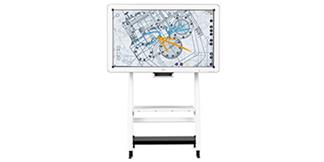
D5510 copiers stockport
The perfect solution for developing, sharing and recording ideas visually. Write or draw in 20 colours and share content live with up to 8 other D5510 whitephotocopiers stockport boards networked on an intranet.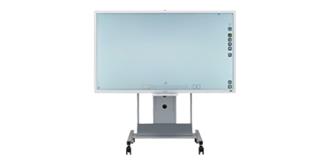
D8400
The interactive Whiteboard D8400 assists training and collaborative work with straightforward, intuitive and immediate operation.Photocopiers
- November 24th, 2016
- Uncategorized
- 0 Comments
 |
This article needs additional citations for verification. (October 2015) (Learn how and when to remove this template message) |

Blackburn photocopier in 2010
How it works (using xerography)[edit]

Schematic overview of the xerographic photocopying process (step 1-4)
Main article: Xerography
| Part of a series on the | ||||||||||||||||||||||||||||||||||||||||||||||||||||
| History of printing | ||||||||||||||||||||||||||||||||||||||||||||||||||||
|---|---|---|---|---|---|---|---|---|---|---|---|---|---|---|---|---|---|---|---|---|---|---|---|---|---|---|---|---|---|---|---|---|---|---|---|---|---|---|---|---|---|---|---|---|---|---|---|---|---|---|---|---|
 |
||||||||||||||||||||||||||||||||||||||||||||||||||||
|
||||||||||||||||||||||||||||||||||||||||||||||||||||
- Charging: cylindrical drum is electrostatically charged by a high voltage wire called a corona wire or a charge roller. The drum has a coating of a photoconductive material. A photoconductor is a semiconductor that becomes conductive when exposed to light.[2]
- Exposure: A bright lamp illuminates the original document, and the white areas of the original document reflect the light onto the surface of the photoconductive drum. The areas of the drum that are exposed to light become conductive and therefore discharge to the ground. The area of the drum not exposed to light (those areas that correspond to black portions of the original document) remains negatively charged.
- Developing: The toner is positively charged. When it is applied to the drum to develop the image, it is attracted and sticks to the areas that are negatively charged (black areas), just as paper sticks to a balloon with a static charge.
- Transfer: The resulting toner image on the surface of the drum is transferred from the drum onto a piece of paper with a higher negative charge than the drum.
- Fusing: The toner is melted and bonded to the paper by heat and pressure rollers.
History[edit]
Chester Carlson, the inventor of photocopying, was originally a patent attorney, as well as a part-time researcher and inventor. His job at the patent office in New York required him to make a large number of copies of important papers. Carlson, who was arthritic, found this to be a painful and tedious process. This motivated him to conduct experiments with photoconductivity. Carlson used his kitchen for his "electrophotography" experiments, and, in 1938, he applied for a patent for the process. He made the first photocopy using a zinc plate covered with sulfur. The words "10-22-38 Astoria" were written on a microscope slide, which was placed on top of more sulfur and under a bright light. After the slide was removed, a mirror image of the words remained. Carlson tried to sell his invention to some companies, but failed because the process was still underdeveloped. At the time, multiple copies were most commonly made at the point of document origination, using carbon paper or manual duplicating machines, and people did not see the need for an electronic machine. Between 1939 and 1944, Carlson was turned down by over 20 companies, including IBM and General Electric—neither of which believed there was a significant market for copiers. In 1944, the Battelle Memorial Institute, a non-profit organization in Columbus, Ohio, contracted with Carlson to refine his new process. Over the next five years, the institute conducted experiments to improve the process of electrophotography. In 1947, Haloid Corporation (a small New York-based manufacturer and seller of photographic paper) approached Battelle to obtain a license to develop and market a copying machine based on this technology. Ricoh Haloid felt that the word "electrophotography" was too complicated and did not have good recall value. After consulting a professor of classical language at Ohio State University, Haloid and Carlson changed the name of the process to "xerography," which was derived from Greek words that meant "dry writing." Haloid called the new copier machines "Xerox Machines" and, in 1948, the word "Xerox" was trademarked. Haloid eventually changed its name to Xerox Corporation. In 1949, Xerox Corporation introduced the first xerographic copier called the Model A.[1] Xerox became so successful that, in North America, photocopying came to be popularly known as "xeroxing." Xerox has actively fought to prevent "Xerox" from becoming a genericized trademark. While the word "Xerox" has appeared in some dictionaries as a synonym for photocopying, Xerox Corporation typically requests that such entries be modified, and that people not use the term "Xerox" in this way. Some languages include hybrid terms, such as the widely used Polish term kserokopia ("xerocopy"), even though relatively few photocopiers are of the Xerox brand. In the early 1950s, Radio Corporation of America (RCA) introduced a variation on the process called Electrofax, whereby images are formed directly on specially coated paper and rendered with a toner dispersed in a liquid. During the 1960s and through the 1980s, Savin Corporation developed and sold a line of liquid-toner copiers that implemented a technology based on patents held by the company. Before the widespread adoption of xerographic copiers, photo-direct copies produced by machines such as Kodak's Verifax were used. A primary obstacle associated with the pre-xerographic copying technologies was the high cost of supplies: a Verifax print required supplies costing USD $0.15 in 1969, while a Xerox print could be made for USD $0.03 including paper and labor. The coin-operated Photostat machines still found in some public libraries in the late 1960s made letter-size copies for USD $0.25 each, at a time when the minimum wage for a US worker was USD $1.65 per hour; the Xerox machines that replaced them typically charged USD $0.10. Xerographic copier manufacturers took advantage of a high perceived-value of the 1960s and early 1970s, and marketed paper that was "specially designed" for xerographic output. By the end of the 1970s, paper producers made xerographic "runability" one of the requirements for most of their office paper brands..JPG)
DADF or Duplex Automatic Document feeder - Canon IR6000
- to use plain (untreated) office paper,
- to implement duplex (or two-sided) printing,
- Able to scan several pages automatically with an ADF, and
- eventually, to sort and/or staple output.
Color photocopiers[edit]
Colored toner became available in the 1950s, although full-color copiers were not commercially available until 3M released the Color-in-Color copier in 1968, which used a dye sublimation process rather than conventional electrostatic technology. The first electrostatic color copier was released by Xerox (the 6500) in 1973. Color photocopying is a concern to governments, as it facilitates counterfeiting currency and other documents: for more information, see Counterfeiting section.Digital technology[edit]

How a modern photocopier works